casino munkebjerg poker — sådan vinder du i 2026
casino munkebjerg poker har altid været en af de mest strategiske og intense former for casinospil. I 2026 er interessen for poker vokset markant, og flere spillere søger nye måder at forbedre deres spil på. casino munkebjerg poker spil kan være nøglen til at forstå de nyeste tendenser i denne udvikling.
See also:
- Forstå casino munkebjerg poker spil på et minut
- casino munkebjerg poker Bonuses & Promotions: Key Terms at a Glance
- Hvad kan casino munkebjerg poker for begyndere gøre for dig?
- casino munkebjerg poker Quick Facts
- Inside the casino munkebjerg poker Client
- Kom godt i gang: casino munkebjerg poker for begyndere i praksis
- Er casino munkebjerg poker spil sikkert at bruge?
- Selvudelukkelse og pause fra poker hos casino munkebjerg poker
Forstå casino munkebjerg poker spil på et minut
fast-fold is a term that originates from the world of competitive poker, particularly in online multiplayer formats, where the speed and precision of decision-making are paramount. In its most literal sense, fast-folding refers to the act of discarding one’s hand almost instantaneously when faced with a bet or raise, without engaging in the typical deliberation that accompanies most poker decisions. This action is not merely a reflexive response but a calculated move based on a player’s assessment of their hand’s relative strength, the table dynamics, the tendencies of opponents, and the overall strategic context of the game. When a player fast-folds, they signal to the table that they have no interest in contesting the pot, often because their hole cards are weak, the board texture is unfavorable, or the betting action suggests that they are facing a stronger hand or a bluff that they cannot profitably call. The concept has evolved beyond its poker origins to become a metaphor in various fields, including business, technology, and everyday decision-making, where it describes the ability to quickly abandon a failing strategy, an unproductive project, or an unworthy opportunity in order to conserve resources and focus on more promising ventures. In the fast-paced environment of online poker, where multiple tables can be played simultaneously and the action is rapid, fast-folding is a crucial skill that separates profitable players from amateurs who waste time and money on marginal hands. The term encapsulates a broader philosophy of efficiency and risk management, emphasizing that not every decision requires extensive analysis; sometimes the best move is to cut losses immediately and move on. To fully understand fast-folding, one must delve into the psychology of poker, the mathematics of expected value, and the strategic nuances that govern when to fold quickly versus when to take a moment to consider one’s options. Additionally, the rise of poker training sites and advanced software has brought fast-folding into sharper focus, with tools that track a player’s fold-to-cbet percentage and other metrics that highlight the importance of timely folds. Furthermore, fast-folding is often contrasted with slow-playing or tanking, where players deliberately delay their actions to gather information or induce reactions from opponents. While slow-playing can be a powerful weapon in certain situations, fast-folding is generally the default for hands that have little to no equity, and it helps maintain a tight and aggressive image that can be exploited later. In the context of tournament poker, where the blinds escalate and the pressure mounts, fast-folding becomes even more critical, as preserving chips is essential to survival. Players who fail to fast-fold often find themselves bleeding chips on hands that they should have discarded, leading to early exits or diminished stacks. In cash games, the same principle applies, but the dynamics differ slightly, as players can rebuy and the risk of ruin is less immediate; nonetheless, fast-folding remains a cornerstone of a solid winning strategy. The term also carries a connotation of discipline and emotional control, as it requires a player to suppress their ego and avoid the temptation to ‘see one more card’ or make a hero call. Fast-folding is not about being timid; it is about being pragmatic and recognizing that the long-term profitability of a poker session is determined by the decisions that are made in the aggregate, not by the outcome of any single hand. In a broader sense, fast-folding can be applied to life decisions, such as ending a toxic relationship, abandoning a doomed business venture, or cutting ties with a counterproductive habit. The ability to fast-fold in these contexts is a sign of maturity and strategic thinking, as it allows individuals to allocate their time, energy, and resources to areas where they can achieve the highest returns. In the corporate world, leaders who practice fast-folding are often praised for their agility and willingness to pivot, as they do not become overly attached to sunk costs or initial plans. This is reminiscent of the concept of ‘failing fast’ in the startup ecosystem, where entrepreneurs are encouraged to test hypotheses quickly and abandon those that do not show promise, thereby minimizing losses and maximizing learning. However, fast-folding is not without its risks; if applied too liberally, it can lead to missed opportunities or a reputation for being too conservative. Therefore, the key is to develop a keen sense of when to fast-fold and when to hold on, which requires experience, intuition, and a deep understanding of the underlying dynamics. In poker, this balance is often achieved through the use of statistical models, such as the Nash equilibrium for tournament play, and through the study of opponent tendencies. For instance, a player might fast-fold a hand like 7-2 offsuit in early position against a raise, but they might also fast-fold a medium pair on a board with three to a flush, recognizing that their equity is likely below the threshold for a profitable call. The decision to fast-fold is often influenced by the concept of ‘reverse implied odds,’ where the potential future bets that a player might have to call are greater than the current pot odds, making a call unprofitable even if the immediate odds seem favorable. This is where the mathematical aspect of fast-folding becomes evident, as players must calculate their equity against a range of hands and compare it to the pot odds being offered. In addition to the mathematical considerations, there are also psychological factors at play, such as the desire to avoid tilt or the need to maintain a certain table image. For example, a player who has been bluffing frequently might choose to fast-fold a medium-strength hand to avoid being caught in a bluff, thereby preserving their credibility for future bluffs. Conversely, a player who has been playing tight might use fast-folding to reinforce that image, making it easier to get paid off when they do have a strong hand. The act of fast-folding also has a social component, as it can be used to communicate information to other players, either intentionally or unintentionally. A quick fold might be interpreted as a sign of weakness, which could encourage opponents to bluff more against that player, or it might be seen as a sign of discipline, which could deter opponents from trying to push them off hands. In online poker, where players cannot see each other’s physical tells, the speed of action becomes a tell in itself, and savvy players will sometimes vary their folding speed to disguise their hand strength.
casino munkebjerg poker Bonuses & Promotions: Key Terms at a Glance
- kr250 + 150 gratis spins
- 189 % bonus op til kr500
- 10 gratis spins uden indbetaling
- Gennemspil 25x på 14 dage
- 45x wagering på 30 dage
- 25x omsætningskrav
Hvad kan casino munkebjerg poker for begyndere gøre for dig?
fast-fold
In the high-stakes world of modern finance, the term "fast-fold" has taken on a dual meaning, one rooted in the gritty reality of poker tables and the other in the algorithmic precision of high-frequency trading. At its core, fast-folding is the art of recognizing when to abandon a position—whether a hand of cards or a portfolio of stocks—before the situation deteriorates beyond recovery. It is a discipline that separates the amateurs from the professionals, the survivors from the casualties of the market’s relentless churn.
Consider the poker player who sits at a table in a dimly lit casino, the air thick with smoke and tension. They’ve been dealt a promising hand—two kings, perhaps, or an ace-king suited—and the initial flop seems favorable. But then the turn card brings a potential flush draw for an opponent, and the river could complete a straight. The novice, blinded by the strength of their opening hand, refuses to fold, convinced that they can bluff their way to victory. The professional, however, understands that fast-folding isn’t a sign of weakness but a strategic retreat. They calculate the pot odds, the implied odds, and the behavioral tells of their opponents. If the math doesn’t favor a continued investment, they muck their cards without hesitation, preserving their stack for a more opportune moment. This decision, made in a split second, is the essence of fast-folding: the ability to cut losses swiftly and move on, unencumbered by ego or regret.
The same principle applies in the trading pits of Wall Street, where algorithms execute millions of transactions per second. Here, fast-folding is a survival mechanism. A trader might spot a sudden geopolitical event—a drone strike, a central bank announcement, or a natural disaster—that could send a stock plummeting. The instinct to hold on, to wait for a rebound, can be catastrophic. Instead, the disciplined trader sets strict stop-loss orders, predefined price points at which they will automatically sell to limit losses. When the market dips to that level, the order executes in milliseconds, effectively folding the position before the damage escalates. This is not panic selling; it’s a calculated response to new information. The trader who masters fast-folding in this context often outperforms the one who clings to hope, because they free up capital to deploy in more promising ventures.
Fast-folding also has psychological dimensions that are often overlooked. In poker, the fear of folding a winning hand can be paralyzing. Players may stay in a hand out of stubbornness, or because they’ve already invested chips in the pot and don’t want to "waste" them. This is known as the sunk cost fallacy, and it’s a trap that fast-folders must actively resist. The professional reframes the decision: the chips already invested are gone, irrelevant to the current choice. The only question is whether the expected value of continuing exceeds the cost of the call. If not, they fold, even if it means losing a pot they thought they deserved. This mental discipline extends beyond the table. In life, fast-folding can mean ending a failing business venture, dissolving a toxic relationship, or abandoning a career path that no longer serves you. It requires the humility to admit that you were wrong and the courage to start anew.
In the realm of technology, fast-folding takes on a literal meaning in the context of protein folding simulations. Researchers use distributed computing projects like Folding@home to simulate the way proteins fold, a process that is computationally intensive. They employ algorithms that can "fast-fold"—that is, quickly determine which configurations are unlikely to be stable and discard them, focusing computational resources on more promising structures. This method has accelerated discoveries in medicine, such as identifying how certain proteins misfold in Alzheimer’s disease. The parallel to financial and poker strategies is striking: both involve rapid pattern recognition and the willingness to abandon unproductive paths.
Moreover, fast-folding is a key component of agile project management. In software development, teams use sprints to deliver features quickly, but they also practice "fast-folding" by killing projects that show no promise early on. Rather than pouring months of work into a feature that users don’t want, they gather feedback, validate assumptions, and pivot. This lean approach minimizes waste and maximizes innovation. Companies like Google and Amazon are famous for their "fail fast" philosophy, which is essentially fast-folding at a corporate scale. They encourage experimentation, but they also set clear metrics for success and are quick to terminate initiatives that don’t meet them.
On a personal level, fast-folding can be a tool for time management. When you’re faced with a task that is unproductive or a meeting that has no agenda, the fast-folder knows when to extricate themselves. They ask, "Is this the best use of my time right now?" If the answer is no, they politely excuse themselves or delegate. This ability to cut losses in the moment can reclaim hours each day, leading to greater focus and productivity. It’s a skill that requires constant vigilance, as our natural inclination is to see things through to completion, even when the completion is costly.
However, fast-folding is not without its risks. In poker, folding too quickly can make you predictable and exploitable. Opponents may bluff more frequently, knowing you’ll fold under pressure. In trading, overreacting to minor fluctuations can lead to excessive transaction costs and missed rebounds. The key is to find the balance between being too trigger-happy and too stubborn. This balance is often achieved through experience and data analysis. Professional poker players review their hands, noting when they folded and whether it was correct in hindsight. Traders backtest their strategies, simulating thousands of scenarios to determine optimal stop-loss levels. This iterative process hones the fast-fold instinct, making it more accurate over time.
Another nuance is the distinction between fast-folding and capitulation. Capitulation is giving up in despair, often at the worst possible time. Fast-folding, on the other hand, is a proactive, strategic choice. It’s about recognizing that the current path is not leading to success and that a different approach is needed. In poker, a player who fast-folds a weak hand is not giving up on the game; they are preserving their resources for a better hand.
Når du vurderer casino munkebjerg poker, skal du overveje betalingsmetoderne.
casino munkebjerg poker Quick Facts
| Feature | Details |
|---|---|
| Seneste udbetaling | 2000 kr |
| Established | 2017, trusted since then |
| Live chat | Yes, 24/7 |
| Max win | 387,000 |
| Velkomstbonus | 25 spins + 200% op til kr1000 |
Inside the casino munkebjerg poker Client
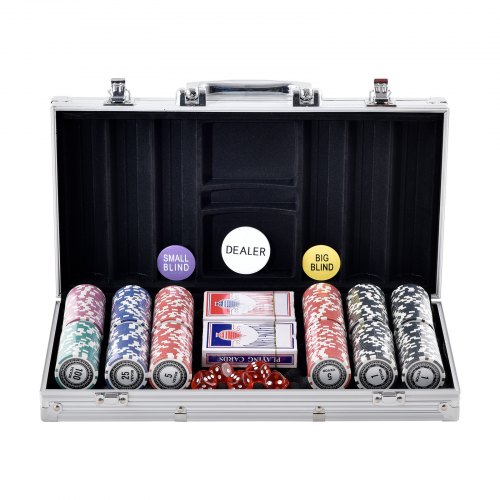
Kom godt i gang: casino munkebjerg poker for begyndere i praksis
Er casino munkebjerg poker spil sikkert at bruge?
Hvad er casino munkebjerg poker?
casino munkebjerg poker er en online pokerplatform, der tilbyder et bredt udvalg af pokerspil og turneringer. Platformen er kendt for sin brugervenlige grænseflade og sikre spillemiljø.
Hvilke bonusser tilbyder casino munkebjerg poker?
casino munkebjerg poker tilbyder en generøs velkomstbonus, ofte med et bonusbeløb på op til 500 gratis spins uden indbetaling. Derudover er der løbende kampagner og loyalitetsprogrammer for eksisterende spillere.
Hvordan foretager jeg en indbetaling hos casino munkebjerg poker?
Du kan nemt foretage en indbetaling hos casino munkebjerg poker med et minimumsindskud på kr12. Platformen understøtter forskellige betalingsmetoder, herunder kreditkort, e-wallets og bankoverførsler.
Hvad er omsætningskravene for bonusser hos casino munkebjerg poker?
Bonusser hos casino munkebjerg poker er underlagt et omsætningskrav på 35x omsætning på 7 dage. Det betyder, at du skal omsætte bonusbeløbet et bestemt antal gange, før du kan hæve eventuelle gevinster.
Er casino munkebjerg poker licenseret og sikkert at spille på?
Ja, casino munkebjerg poker er fuldt licenseret og reguleret af Spillemyndigheden. Det sikrer, at platformen overholder strenge krav til fair spil og beskyttelse af spillernes data og midler.
poker casino 2026 – spilleregler og tricks
spil keno — hurtig udbetaling | spil keno
Selvudelukkelse og pause fra poker hos casino munkebjerg poker
Spil er kun for voksne over 18 år. Spillemyndigheden er den danske licensmyndighed, og du kan spærre dig selv i ROFUS-registret for at beskytte din spilleadfærd. Hos casino munkebjerg poker opfordrer vi til ansvarligt spil: Sæt indbetalings- og tidsgrænser, og spil kun for underholdningens skyld – aldrig for at indhente tab. Har du brug for hjælp, kan du kontakte StopSpillet på 70 22 28 25, som tilbyder gratis og anonym rådgivning. Spil med omtanke.